
⇒ A knowledge-sharing workshop organised in Ahmedabad shared research insights on heat and water
⇒ Very warm nights are rising faster than very hot days across India, straining human health
⇒ India’s treated used water could unlock an economic opportunity of up to $35 billion by 2047, creating over 1 lakh new jobs
⇒ 31,265 million cubic meters of treated used water (TUW) could be reused annually to meet major industrial & irrigation demand
AHMEDABAD, GUJARAT | 25th MARCH 2026 — The Council on Energy, Environment and Water (CEEW), a leading climate think tank, today organised a knowledge-sharing workshop on the challenges of extreme heat and the growing water demand. CEEW experts Dr Vishwas Chitale, Nitin Bassi, and Disha Agrawal shared insights from their research in their respective areas.
Dr Chitale explained that extreme heat now poses a risk to 57 per cent of Indian districts–home to 76 per cent of the population. CEEW’s study, How Extreme Heat is Impacting India: Assessing District-level Heat Risk presents a first-of-its-kind composite heat risk assessment of 734 districts in India using 35 indicators, offering a granular picture of how climate change has reshaped heat hazard trends from 1982 to 2022. Of these, 417 districts fell in the high and very high risk categories while 201 were classified as moderate risk. In Gujarat, the majority of districts fall under high to very high risk. He highlights three key trends based on this: an alarming rise in very warm nights; increasing relative humidity across North India, particularly in the Indo-Gangetic Plain; and heightened heat exposure in dense, urban, and economically critical cities such as Delhi, Mumbai, Ahmedabad, Hyderabad, Bhopal, and Bhubaneswar.
According to CEEW study, ~70 per cent of districts have seen more than five additional very warm nights per summer over the past decade (2012-2022) compared to the climatic baseline (1982-2011). By contrast, only ~28 per cent of districts saw a similar increase on very hot days. These warmer nights are rising faster than hot days and make it harder for the human body to cool down and recover from daytime heat. This has serious health implications, especially for the elderly, outdoor workers, children, and people with pre-existing conditions such as hypertension and diabetes.
A rise in relative humidity is making moderate heat more dangerous. In Indo-Gangetic Plain, humidity has increased by up to 10 per cent over the past decade, from around 30–40 per cent to 40–50 per cent. Traditionally drier cities such as Delhi, Chandigarh, Kanpur, Jaipur and Varanasi are now seeing higher humidity levels. Humidity significantly raises the ‘felt’ temperature, sometimes by 3-5°C more compared to the recorded air temperature, making even moderate heat more dangerous. When body temperature exceeds 37°C, sweating is the primary cooling mechanism, but high humidity hinders evaporation.
The CEEW study recommends that HAPs be regularly updated using granular data and expanded to include measures for night-time heat and humidity stress. CEEW is currently supporting the development and strengthening of over 140 localised city and district-level heat action plans across 8 states in India. Through ward-level heat risk assessments, the goal is to enable more than 300 such plans by 2027.
Dr Vishwas Chitale, Fellow, CEEW, said, “India has made important strides in responding to extreme heat, but now must invest in long-term resilience. Solutions like parametric heat insurance, early warning systems, net-zero cooling shelters, and cool roofs must become core to heat action plans. States like Maharashtra, Odisha, Gujarat and Tamil Nadu are already taking pioneering steps by integrating climate and health data into local planning.”
Water
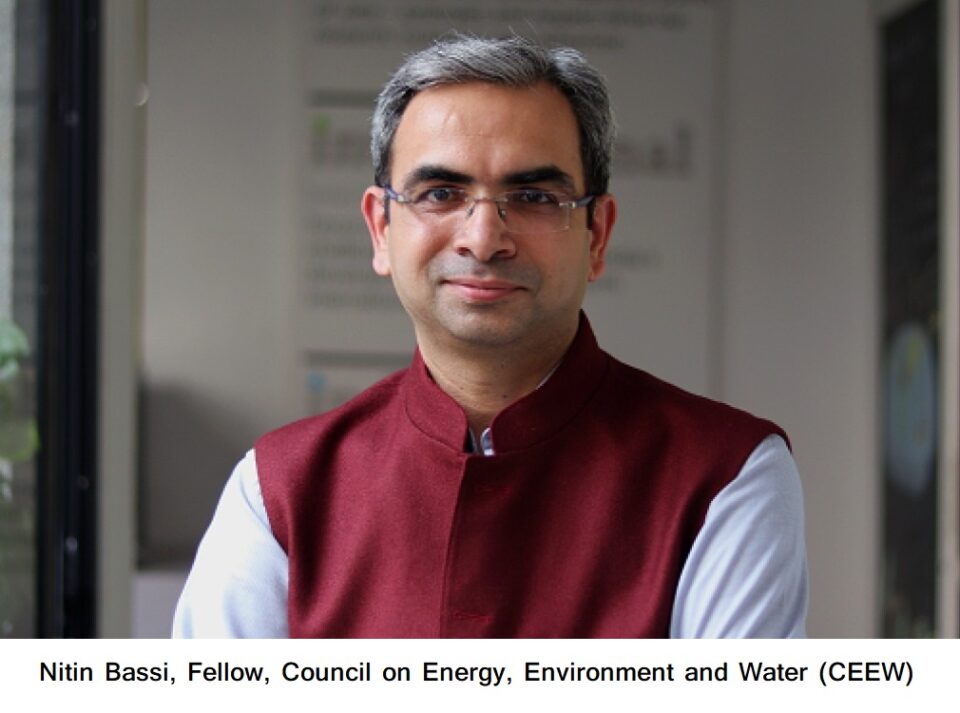
Referring to the study “Financing for Treated Used Water Reuse in India,” Nitin Bassi, Fellow at the Council on Energy, Environment and Water (CEEW), said that India’s treated used water (TUW) economy could unlock up to INR 3.04 lakh crore (USD 35 billion) in economic opportunity by 2047. This study projects that India could reuse 31,265 million m³ of treated used water in 2047—enough to meet a significant portion of industrial and irrigation demand—if backed by the right mix of financing, regulation, and infrastructure. At present, India treats only about 28 per cent (20.24 billion litres per day) of the used water it generates, and more than 80 per cent of cities either do not reuse treated water or lack functional reuse infrastructure, leaving vast untapped potential in urban systems. Scaling up the reuse of treated used water could also create over 1 lakh new jobs across the country by 2047.
Circular investments are already delivering results in Indian cities. Surat currently supplies tertiary-treated used water to industries at INR 36 per kilolitre—slightly lower than freshwater rates—helping the city generate over INR 230 crore in revenue between 2014 and 2021.
Nitin Bassi, Fellow, CEEW, added, “Scaling treated-used-water reuse is one of the most practical ways to water-secure India’s cities. Urban local bodies must lead India’s shift to treated wastewater reuse by developing long-term city plans, diversifying funding, and setting fair, cost-recovery tariffs. Beyond the one lakh direct jobs expected in plant operations, expanding reuse will also create employment in construction and technology services, generate steady municipal revenue, attract green investment, and reduce pollution in rivers. With the right planning, pricing and business models, used water can become a financially sustainable and environmentally restorative urban resource.”
—————
