
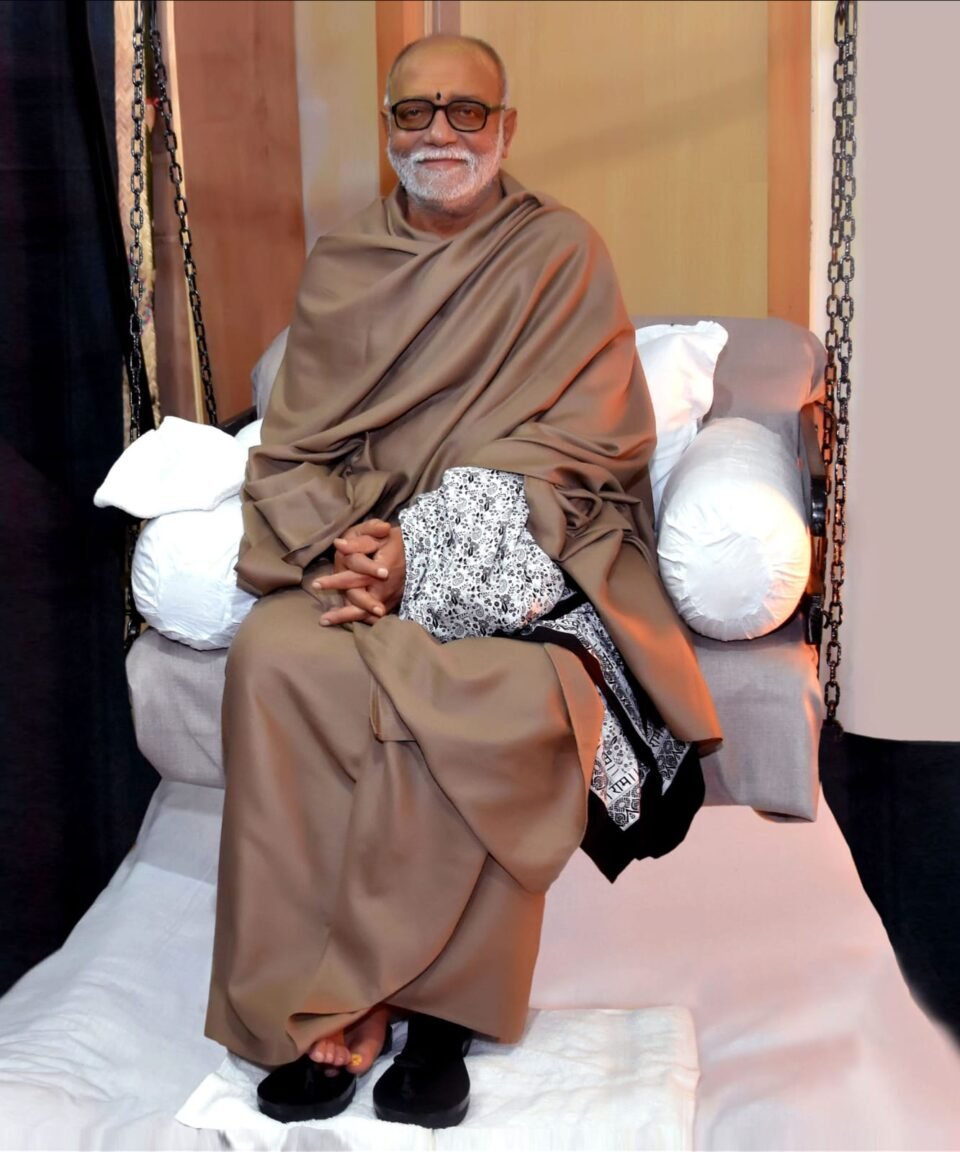
—The second leg of the Yatra, from Dwarka to Jagannath Puri, commences on November 14, reinforcing the spirit of unity across India’s diverse cultural and spiritual landscape.
—Following the first leg of the journey from Kanyakumari to Kedarnath, Pujya Morari Bapu’s Bharat Swastik Yatra will resume from Dwarka, carrying forward its message of Sanatan Dharma, unity and universal well-being
NEW DELHI | 12th NOVEMBER 2026 | The Bharat Swastik Yatra, led by revered spiritual leader and Ramcharitmanas exponent Pujya Morari Bapu, is set to enter its second phase on November 14, with the journey commencing from Dwarka and concluding at Jagannath Puri on November 22. The second leg follows the first phase, which travelled from Kanyakumari to Kedarnath between October 10 and 23, connecting some of Bharat’s most significant spiritual, cultural and historical destinations.
The first part had kicked off in Kanyakumari and culminated at Kedarnath, passing through important centres, including Kalady, Sringeri, Hampi, Tuljapur, Omkareshwar, Jhansi, Mathura, Kurukshetra, Attari-Wagah and Jammu. The route brought together destinations associated with India’s spiritual heritage, highlighting the interconnectedness of its traditions across regions.
The second part will begin at Dwarka and pass through Somnath, Dakor, Ujjain, Nagpur, Champaran in Chhattisgarh, Mayapur and Kolkata before reaching Jagannath Puri on November 22. Together, the two phases cover 13 Indian states and the Union Territory of Jammu and Kashmir, connecting the western, southern, northern and eastern regions through a shared spiritual and cultural ethos.
The geographical and cultural breadth of the Yatra also resonates with the spirit of India’s National Anthem, Jana Gana Mana, which evokes regions including Punjab, Gujarat, the Maratha region, Dravida, Utkala and Banga, as well as the rivers Ganga and Yamuna, the Himalayas and the ocean.
The route also brings the Yatra into contact with a wider network of rivers associated with its destinations, including the Periyar, Tunga, Tungabhadra, Bhima, Narmada, Betwa, Ravi, Tawi, Mandakini, Gomati, Shipra, Mahanadi, Jalangi, Hooghly and Daya. Together, these rivers add another dimension to the journey’s engagement with India’s varied landscapes and regional traditions.
Pujya Morari Bapu said, “Omkar is synonymous with the Swastika. Omkar, or Pranava, is formless (Nirakaar), representing the attributeless Absolute (Nirgun), while the Swastika is its manifest form (Sagun), symbolising auspiciousness and the welfare of the entire universe.
The four-sided sacrificial altar (Chatushkon Yajnavedi) also embodies the Swastika, reminding us that the essence of Yajna lies in offering something for the welfare of others. It is through such selfless offerings that we cultivate peace, harmony and the well-being of the entire world.”
Organised by Santkripa Sanatan Sansthan, the Bharat Swastik Yatra seeks to bring together the country’s diverse spiritual traditions, regions and communities through the enduring ideals of Sanatan Dharma. Inspired by the Swastik, an ancient symbol of auspiciousness and well-being in Indian traditions, the Yatra reflects the spirit of unity, collective welfare and national integration.
Speaking about the vision behind the Yatra, Madan Paliwal, Chairman, Miraj Group and Managing Trustee, Santkripa Sanatan Sansthan, said, “The Bharat Swastik Yatra reflects this enduring spirit by bringing people from different regions and walks of life together. As the Yatra moves into its second phase, from Dwarka to Jagannath Puri, it continues to reinforce the ideals of unity, national integration and collective well-being. The Swastik, with its message of svasti—well-being and auspiciousness—beautifully represents this shared journey and our collective aspiration for the welfare of all.”
The Yatra draws inspiration from the spiritual legacy of Adi Shankaracharya, whose travels across Bharat helped connect diverse regions through the philosophical and spiritual traditions of Sanatan Dharma. The four arms of the Swastik serve as a reminder of the interconnectedness of the country’s different regions and the larger ideal of a united Bharat. The Yatra also reflects the enduring nature of Sanatan Dharma as a perennial tradition rooted in timeless values.
For Pujya Morari Bapu, whose Ram Kathas are centred on Satya, Prem and Karuna—Truth, Love and Compassion—the Yatra extends these values across the country, bringing communities together through spirituality, dialogue and shared cultural heritage.
As the Bharat Swastik Yatra prepares to travel from Dwarka to Jagannath Puri, it carries forward its message of auspiciousness, harmony and unity, reaffirming the shared spiritual and cultural foundations that connect Bharat across its many regions.
The Ram Katha and associated programmes during the Yatra are free of charge and open to all, with bhandara (vegetarian community meals) being organised at every location as prasad.
== ENDS ==
